MECHANICAL ENGINEERING
Mechanical Engineering
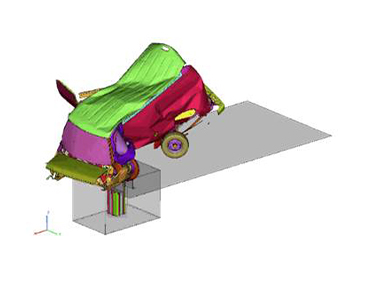
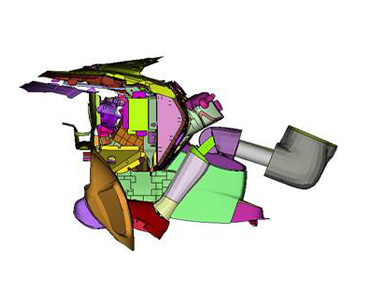
Static and non-linear simulation, vibration, crash, impact, thermo-mechanical. Structural validation and EuroNCAP certification.
// Selected work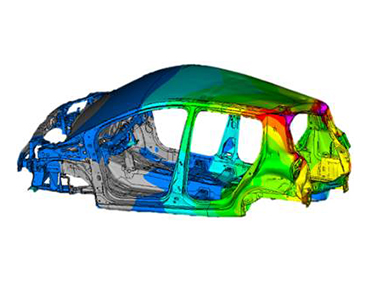
Our approach
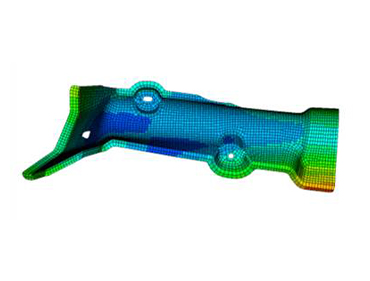
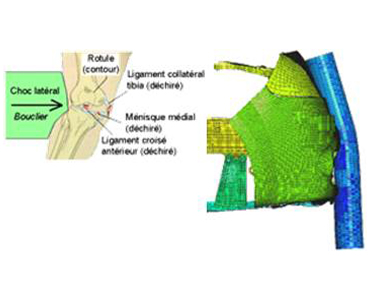
We size and validate structures through simulation: linear and non-linear statics, dynamics and vibration, crash and impact, fatigue, thermo-mechanics and biomechanics. Models are correlated with tests to stay predictive, and files are built to meet regulatory requirements, notably EuroNCAP protocols and ECE regulations.
Upstream, we iterate in short loops with design to optimize mass; coupled phenomena rely on fluid engineering. Quantified examples are detailed in our case studies.
What we deliver
- Calculation notes and sizing reports
- Documented finite-element models
- Simulation/test correlation summaries
- Validation plans and regulatory files
- Mass optimization studies
Which solvers do you use?
Industry-standard implicit and explicit solvers, depending on the domain: statics, dynamics, crash or fatigue. The choice is made with your teams to stay compatible with your processes.
Do you work on regulatory files?
Yes. We build validation files aligned with EuroNCAP protocols and ECE regulations, from the definition of the simulation plan to the final summary.
How do you reduce mass without degrading performance?
Through topology and parametric optimization, bounded by strength and fatigue criteria, then validated by simulation and, when needed, by testing.
What is the difference between linear and nonlinear analysis?
A linear analysis assumes the part remains elastic and deforms little. As soon as plasticity, contact, large displacements or materials such as plastics and elastomers come into play, a nonlinear analysis is needed: longer, but much closer to reality.
How long does a sizing study take?
A few days to check a single part under a known load, a few weeks for a subassembly with many load cases, welded joints or fatigue. The lead time is set at kick-off, together with the simulation plan.
How do you validate a simulation model?
Through a mesh convergence study, checks of reactions and force balances, then, whenever possible, correlation with physical tests.
Do you perform fatigue analysis?
Yes. From your load spectra or test measurements, we identify critical areas and estimate service life, welds included, then propose reinforcements or weight savings.
Do you work on plastics and composites?
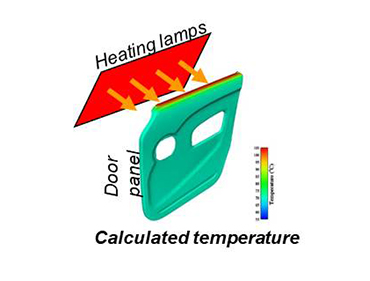
Yes, with suitable material laws: plasticity, creep, temperature effects. Our case studies on solar load on automotive plastic parts and on freezing in an HDPE tank are two examples.
Content written and reviewed by the VSOLUTION engineering team. Technical direction: Hervé Foucart, founder and managing director, over 20 years of automotive, aerospace and rail projects.