FLUID ENGINEERING
Fluid Engineering
CFD, external and internal aerodynamics, thermal simulation, lubrication, flows, aero-acoustics and emissions control.
// Our simulation process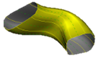 CAD
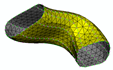 Surface meshing
 Volume meshing
 Calculation
Our approach
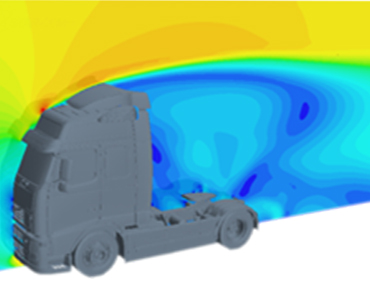
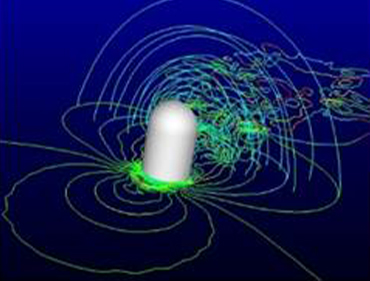
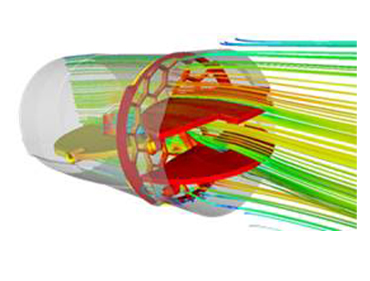
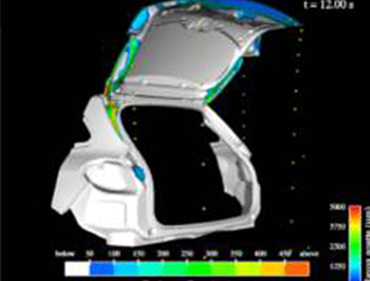
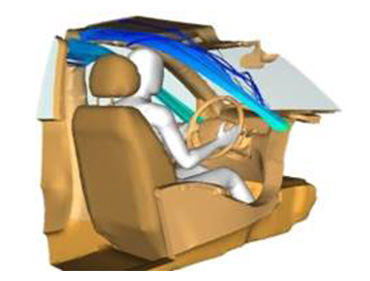
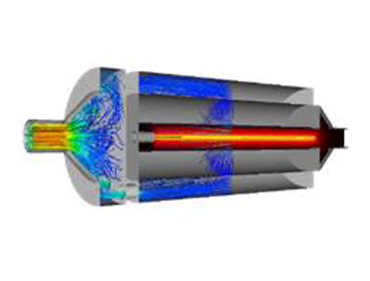
Every study follows a proven process: CAD preparation, surface and volume meshing, computation, then post-processing and synthesis. We cover external and internal aerodynamics, thermal management, multiphase flows, lubrication, aero-acoustics and emissions control. The automation of our simulation pipelines, accelerated by AI, lets us compare many design variants within short lead times.
Results do not stop at a false-color picture: every report states actionable design recommendations and is correlated with tests whenever possible, together with mechanical engineering.
What we deliver
- Illustrated CFD study reports and comparative summaries
- Pressure, velocity, temperature and acoustic maps
- Quantified design recommendations
- Reusable, documented simulation pipelines
- Simulation/test correlation
What types of CFD analyses do you perform?
External and internal aerodynamics, engine and cabin thermal management, multiphase flows, gearbox lubrication, aero-acoustics and emissions control systems.
How long does a CFD study take?
From a few days for a variant on an existing pipeline to a few weeks for a full study: the scope and expected validation level set the lead time, agreed together at kick-off.
Do you work on your licenses or ours?
Both. We run industry-standard solvers on our own computing resources or remotely within your environments, depending on your confidentiality constraints.
Do you provide CFD subcontracting for the automotive industry?
Yes, it is our main industry. Carmakers and suppliers entrust us with external aerodynamics, underhood and cabin thermal management, internal flows and emissions control, on a fixed-price basis or as reinforcement for their teams.
How accurate is a CFD simulation?
On a vehicle, a well-controlled simulation generally stays within a few percent of the wind tunnel on the drag coefficient. Our external aerodynamics study with OpenFOAM lands within about 3% of a leading commercial solver (Cd 0.348).
Do you use open-source software?
Yes, OpenFOAM in particular, alongside commercial solvers. Open source removes license costs on campaigns with many variants and lets us adapt the code to specific physics, as in our electrostatic painting simulator.
What data do you need to get started?
A CAD model in a neutral format (STEP or IGES), the target operating conditions (speeds, temperatures, flow rates) and, if available, test measurements to calibrate the model.
Can you quickly compare several design variants?
Yes. Once the simulation pipeline is set up, each new variant is meshed and computed automatically, so many geometries can be ranked before the design is frozen.
Content written and reviewed by the VSOLUTION engineering team. Technical direction: Hervé Foucart, founder and managing director, over 20 years of automotive, aerospace and rail projects.