Hydrogen vehicle: a fuel cell powertrain simulator
Estimating hydrogen consumption and settling the energy strategy of a fuel cell vehicle before any prototype: a complete system simulator, from the WLTP cycle to the battery state of charge, second by second.
The challenge
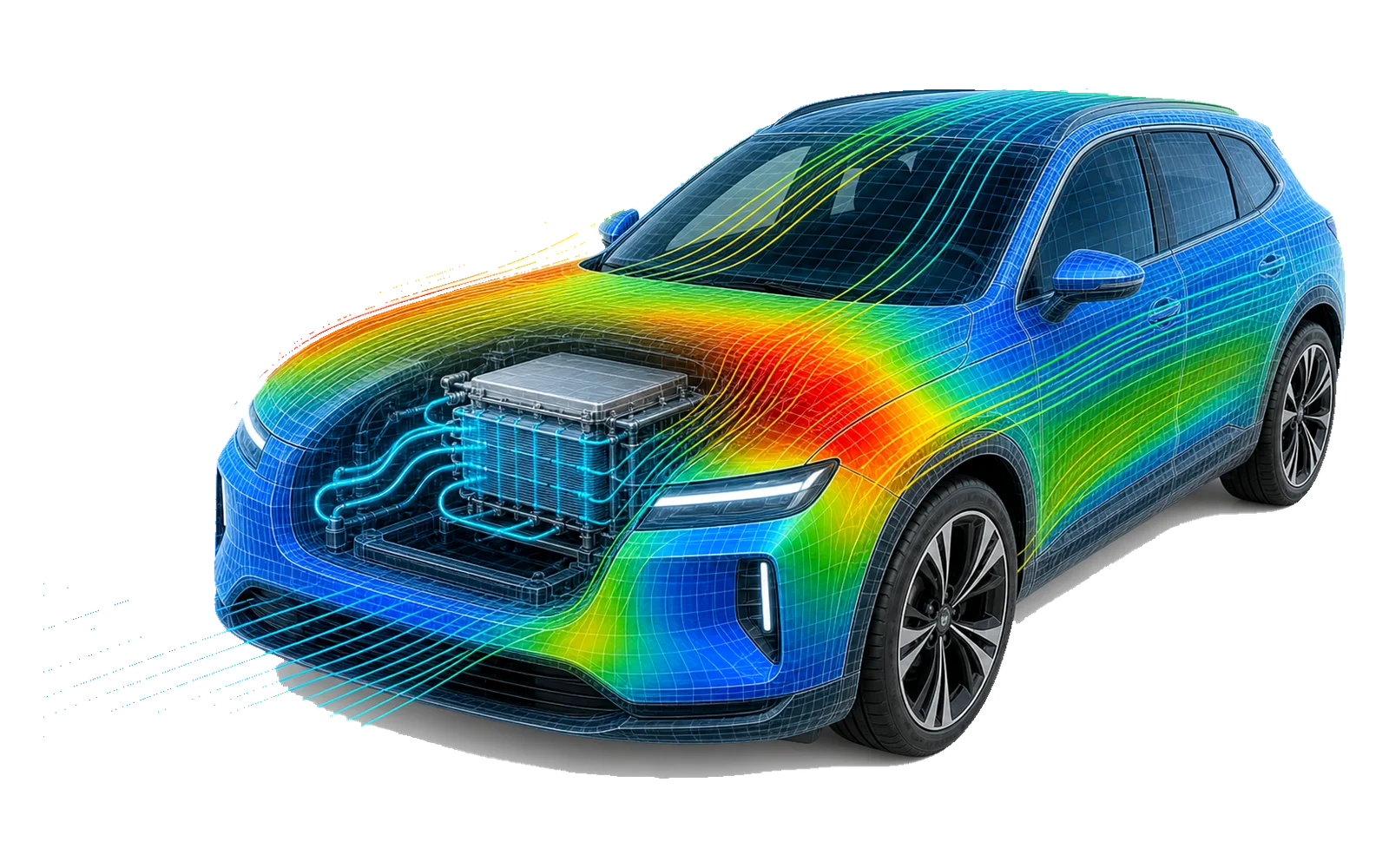
A fuel cell electric vehicle under development: 2,100 kg, Cx = 0.29, 2.70 m² frontal area, 8 kg hydrogen tank at 700 bar, 100 kW fuel cell, 800 V / 20 kWh battery and three electric motors (two 100 kW at the front, one 200 kW at the rear). Before any prototype, hydrogen consumption had to be estimated, powertrain architectures compared (series, parallel, mixed) and the fuel cell/battery power split strategy tuned.
Our approach
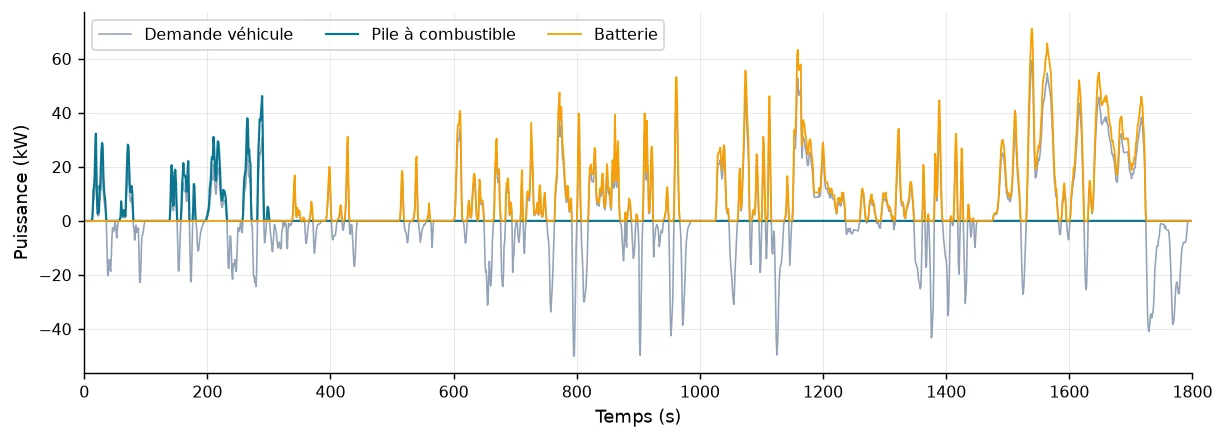
A backward system simulator: from the speed profile and road slope, the model works the power demand back through chained road, vehicle, drivetrain and motor models, then splits it between fuel cell and battery. Two levels of fidelity are provided: a global model for fast scenario comparison, and a detailed model that can be calibrated against tests.
The application ships with a parameter interface: vehicle characteristics, WLTP or imported profiles, road slope, and real-time result playback.
Results
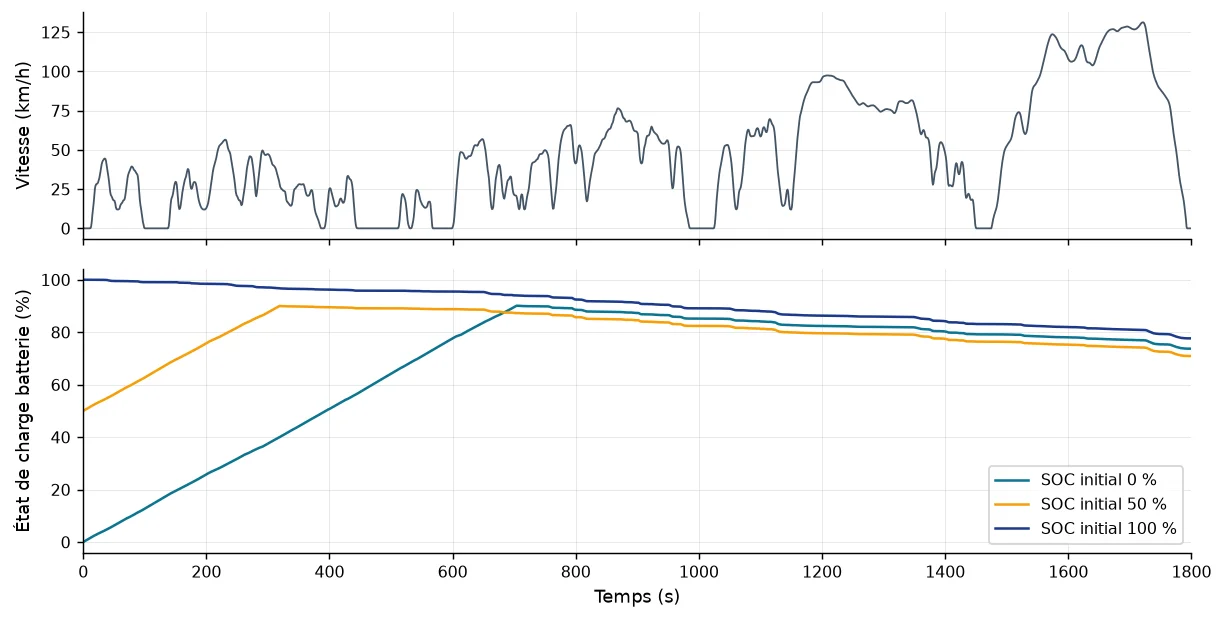
- Hydrogen consumption, fuel cell/battery/vehicle power, currents and state of charge simulated second by second over the full WLTP cycle (23.26 km, peaking at 131 km/h)
- Three initial state-of-charge strategies compared (0, 50 and 100%): the fuel cell recharges the battery, then trajectories converge to 74-78% at the end of the cycle
- Series, parallel and mixed architectures assessed by simply changing parameters, with no new physical test
What comes next
The same modeling framework extends to test-based calibration through parameter tuning, then to the chassis: stability, road holding, performance and safety of the full vehicle.